


Direct answer
A content distribution system is the planned set of owned, earned, and AI-mediated paths that move a piece of work from “published” to “seen by the right people with a next step.” Writing more without distribution ownership increases inventory, not demand — and in 2026 it widens the gap between you and the buyer, because the channels that used to deliver traffic for free no longer do.
The evidence is no longer arguable. SparkToro’s 2026 zero-click research, built on a Similarweb clickstream panel, found that 68% of U.S. Google searches ended without a click to anywhere in the first four months of 2026 — up from 45% in 2016 and just over 60% in 2024. Google’s AI Overviews appear on more than 20% of searches and cut click-through rates by nearly 60% when they do. An ongoing Ahrefs tracker of 75,000+ professionally managed sites watched Google’s share of their traffic fall about 22% in a single year.
Meanwhile, CMI’s 2026 B2B Content and Marketing Trends report (1,015 B2B marketers) still ranks “creating content that prompts a desired action” (40%) and resource constraints (39%) as the top two challenges in the discipline. Distribution fixes both: it converts production into performance, and a repeatable system eliminates the weekly scramble.
Why distribution is the strategy now
Three structural shifts have flipped the order of operations.
1. Search no longer pays for publishing. The click is optional; the citation is not. Only 12% of URLs cited by ChatGPT, Gemini, and Copilot rank in Google’s top 10 for the same query, and about 80% of AI citations come from pages that don’t rank anywhere in Google; ChatGPT cites pages ranking 21+ roughly 90% of the time, per Semrush’s AI search study. Ranking and being cited are two different games, and the citation game is won in distribution — Reddit threads, trade press, partner newsletters, community answers.
2. AI traffic is real, and it’s higher intent. Adobe Digital Insights’ Q2 2026 AI traffic report found AI-sourced visits to U.S. retailers grew almost 400% year over year in early 2026 and convert about 42% better than non-AI traffic; Semrush’s modeling puts the average AI search visitor at 4.4x the conversion value of a traditional organic visitor. By the time a machine sends someone to you, they’ve already been pre-qualified by the answer they just read.
3. Owned audiences compound; rented reach doesn’t. beehiiv’s State of Newsletters 2026 tracked 28 billion emails and 255 million readers in 2025: open rates rose to 41.2% (from 38% in 2024) even as click-through fell to 3.2% — readers consume the value inside the email itself, and newsletters using recommendation networks grew 2.75x faster.
Robert Rose frames the shift: “In a world of ‘be found’ — classic search optimization — the advice was to build owned media. We’re not in that world anymore. In a world of ‘be cited’ — answer engines and declining referral traffic — the role of owned media must change.” Not shrink. Change.
The four components of a distribution system
1. Owned channels — the compounding core
Your site hubs and newsletter are the only surfaces where you control the relationship, the data, and the next step. The newsletter is the strongest owned asset a B2B team can build in 2026: engagement is rising (41%+ open rates across a 28-billion-email sample, 86% of opens on desktop), deliverability now rewards engaged readers under Gmail’s bulk-sender rules, and owned data survives platform changes. See the full model in our research on content distribution ownership in 2026.
Your website remains essential — not to win the click, but to be the place the machine gets your facts right, and the destination that converts when a buyer does arrive. Pair the hub with a landing page architecture that assumes visitors already know you.
2. Amplification paths — rented and earned
Rented: LinkedIn. It remains the single most effective distribution channel in B2B — 76% of B2B marketers rate it their most effective thought leadership channel in CMI’s 2026 data. But the algorithm changed. Per Buffer’s 2026 analysis of the LinkedIn team’s own guidance, the ranking signals are now relevance, expertise, and engagement — virality is out, connections see your posts first, and engagement bait is punished. Practically: PDF carousels earn roughly 3x the engagement of videos and 6x that of text-only posts, replying to comments lifts engagement by 30%, and 2–5 posts per week beats sporadic bursts. Post the argument; keep the value in the feed. Put the link in the comments if reach is the goal.
Earned: the citation engine. LLMs overwhelmingly cite third-party coverage when answering buyer questions — Muck Rack’s May 2026 reading of what AI consumes shows trade publications and Reddit carrying the most weight with AI models, with bylined articles prioritized. Unpaid voices are five times more powerful than paid ones in driving brand trust, per the 2026 Edelman Trust Barometer Special Report. LinkedIn’s 2026 Global B2B Marketing Outlook (YouGov, 1,299 marketers) adds the numbers: 70% of marketers say buyers rely more on peer voices and experts than on brand-produced content, 56% of buyers depend on creator input in the final purchase stage, and 82% say creators increase credibility with decision-makers.
That’s why the strongest programs treat earned media as raw material. DataRobot’s Lenox Powell describes a podcast appearance becoming “clips for social, a blog post, a pitch — the earned placement isn’t the deliverable; the downstream content machine it feeds is the deliverable.” The results compound: shipping company NYSHEX’s earned program produced 100+ placements in under a year, a 101% lift in referral traffic, and a 36% gain in organic mentions.
3. Repurposing rules — deliberate slices, not shredding
Repurposing fails when you cut one asset into smaller copies of itself. Each surface gets a deliberate slice of the idea:
| Surface | Slice | Example |
|---|---|---|
| LinkedIn (rented) | The provocation | The sharpest claim, as a carousel with the argument in the feed |
| Newsletter (owned) | The interpretation | A distinct angle with a fresh example, 3–5 links max |
| Trade press / podcast (earned) | The proof | The research, framework, or case data behind the point of view |
| Reddit / communities (earned) | The honest answer | Direct, non-promotional answers to real questions |
| Sales enablement (internal) | The objection-handler | A one-pager answering the buyer’s top three doubts |
This is the full content repurposing sprint, but the rule fits in one sentence: if the slice isn’t a different cut of value, don’t make it.
4. Attribution — multi-touch reality
The system breaks when you judge it on last-click math. Dark social hides referral traffic as direct, conversion windows are arbitrary, and AI impressions leave no tracking trail at all. SparkToro’s default is the right one: retire “traffic as scoreboard” and run a correlation dashboard — does branded search, direct traffic, and revenue move when you show up where your audience already pays attention?
Build it: the distribution brief before the brief
Before a brief is approved, answer: who is the primary segment? What job does the asset do — create, capture, convert, or enable sales? Which owned channel carries it for 90 days? What amplification runs in week one? What internal links connect it to the topic hub? What conversion path matches intent? If you can’t answer these, you don’t have a content project — you have a writing exercise.
Then write a one-line distribution brief per idea — the slice (which part of the value goes to each surface), the ask (rented: nothing but a follow; earned: curiosity; owned: commitment), and the signal (rented: did the argument travel? earned: were you seen as a trusted source? owned: did anyone choose a deeper relationship?). Make it a standing field with the content brief template and audit with the distribution checklist.
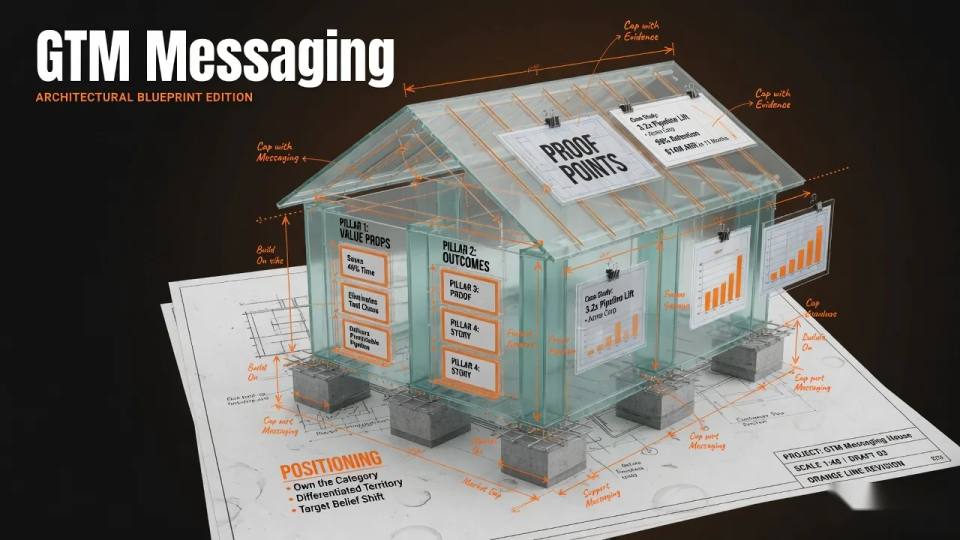
Two non-negotiables: assign a distribution owner — a named human accountable for reach, not “whoever posts on LinkedIn” — and tie the asset to a messaging architecture so the provocation on social and the depth on your site are the same argument.
The per-channel playbook for 2026
Newsletter (the compounding engine). Weekly cadence dominates — 47% of publishers send weekly, and it correlates with the strongest growth. Send in the early-morning window (5–6am EST posted 44%+ open rates in beehiiv’s 2025 data), keep subject lines under 20 words, curate 3–5 links, and join a recommendation network — participating newsletters grow 2.75x faster. Detail lives in our newsletter growth and retention research.
LinkedIn (the reach engine). Lead with the provocation in a carousel. Reply to every comment. Design for the zero-click feed — the post must deliver value to someone who never leaves LinkedIn.
AI search (the new demand channel). Get cited by being the best-documented answer, not the best-ranked page. Structure claims so they’re quotable, publish original data, keep entities consistent, and appear where LLMs actually read — Reddit is the second most-cited domain in Google AI Overviews, so Reddit strategy belongs in B2B distribution. The mechanics are in the AI search visibility playbook. And plan for AI agents as a channel: 28% of B2B marketers experiment with agents, rising to 43% among CMI’s pacesetters.
Earned (the trust engine). Pitch bylines to the trade publications your buyers read, run the idea through a podcast, answer real questions on Reddit without the link drop. One idea, multiple credible stages, all circling back to the owned depth.
Paid (the multiplier). Amplify what organically proved itself — a carousel that earned engagement, a newsletter issue with above-median opens — not assets that failed.
Mistakes that kill the system
- Treating distribution as promotion. A megaphone pointed at a finished asset is a prayer, not a strategy.
- No owner. “Everyone shares it” means no one is accountable for reach.
- The same asset everywhere. Four channels carrying the same blog post is spam with extra steps.
- First ask is a download. On rented land, the first ask of a stranger must be nothing — or a follow.
- Measuring rankings as AI visibility. Keyword positions can’t capture a channel where 80% of citations come from non-ranking pages.
- Skipping the 90-day plan. Week-one amplification without a 90-day owned carry is rented attention you never convert.
Measurement without self-deception
CMI’s 2026 data: 33% of B2B marketers still struggle to measure content effectiveness, while 63% track business impact (leads, pipeline influence) alongside engagement — and 75% of pacesetters do. That gap is your structural advantage. Track assisted pipeline (not last-click form fills — see pipeline metrics that matter), subscriber growth quality, returning readers to topic hubs, LLM citation frequency (how often your brand is cited in AI answers, and in which narrative frame), and correlation across branded search, direct traffic, and revenue when distribution runs.
The point isn’t a perfect number for every channel. It’s a dashboard honest enough to survive a CFO, and a system that keeps compounding while channels churn.
Next step
Pair this with the demand generation operating system — distribution is its content pillar — and run your first cornerstone asset through the repurposing sprint this quarter. Subscribe to The Demand Brief for weekly distribution patterns worth copying.
Citations
Sources & references
- 9 Takeaways and Insights From the 2026 B2B Content and Marketing Trends ReportContent Marketing Institute
- The Earned Media Revival: What B2B Leaders Need to Know NowContent Marketing Institute
- Why Your Distribution Strategy Is Stunting Your Audience GrowthContent Marketing Institute