

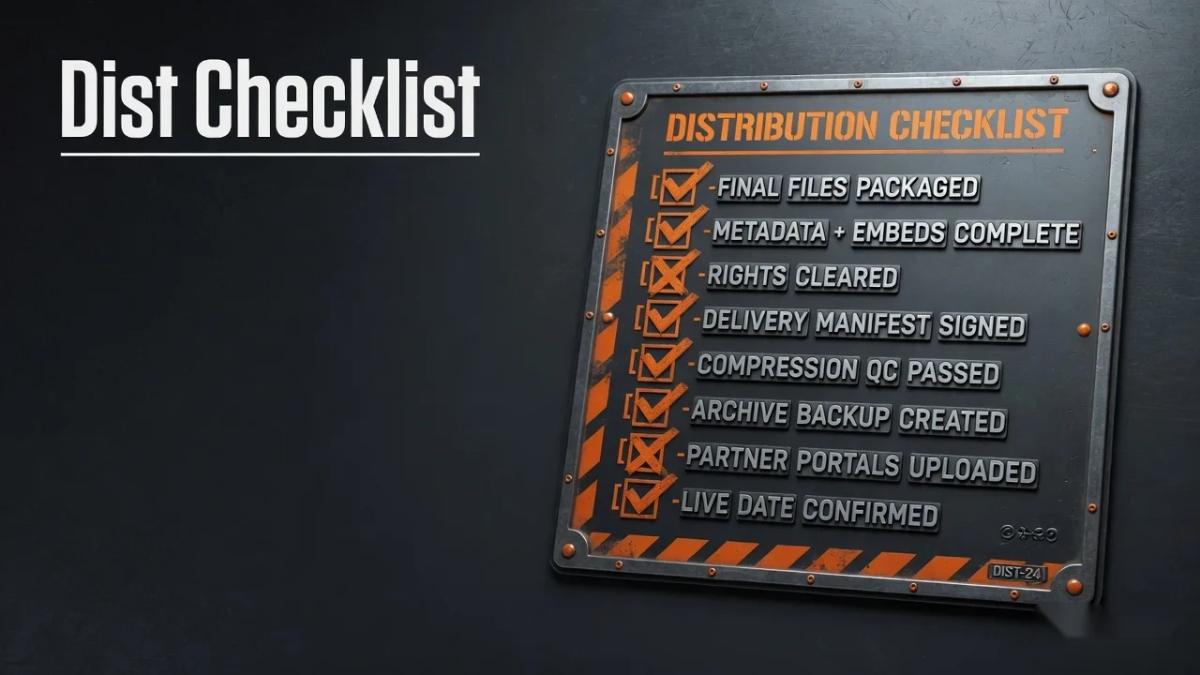
Distribution is where most pillar assets go to die. The 2026 data says the channel mix has shifted: 94% of B2B buyers use generative AI during research (6sense, cited by LinkedIn), LinkedIn is now the most-cited domain for professional queries in AI search (Profound, 2026, cited by LinkedIn), and Gartner forecasts traditional search volume will drop 50% by 2028 — LinkedIn’s own non-branded search traffic is already down up to 60%. Meanwhile, email remains the strongest owned channel: 41% of small businesses expect it to be their most valuable channel in 2026 (Constant Contact), and the top 8% of email programs earn 45:1+ ROI, most commonly by sending newsletters (Litmus). This checklist makes you decide, before publish, which slice of the asset goes where, who owns it, and how you will know it worked. Copy it, adapt it, and assign every line.
Before publish — brief and derivative plan
The brief is the contract. Name owners before the asset ships — an unnamed channel is a channel that will not happen. The working doc: one page, the slice per surface, the ask per surface, the owner per surface.
- Distribution brief drafted: slice, ask, and owner per channel
- One owner named per channel (see Ownership & SLA below)
- Direct answer written near the top of the pillar (definitions, numbers, named framework) so AI models can extract it
- Q&A block drafted for AI search visibility
- Derivative list locked: newsletter edition, LinkedIn article + posts, sales one-pager, FAQ/SEO extract
- LinkedIn article plan set (800–1,200 words, question-driven headers) — articles generate roughly 60% of LinkedIn’s content citations in AI search
- Newsletter edition written, not rescheduled — newsletters are up 12% year over year among top-performing programs (Litmus)
- UTM and tracking plan agreed before launch, so day-30 reporting is not archaeology
Launch day — owned channels first
Owned surfaces earn the depth; rented surfaces earn the provocation. Email goes out the door first: average open rates run 32.6% (Constant Contact) to 39.6% (GetResponse, 4.4 billion sends), with click rates of 2.0–3.3% — and tech-industry senders see far higher engagement (44.7% open, 7.4% CTR per GetResponse). Nothing in organic social reliably matches that.
- Newsletter edition scheduled for launch day to the segment the asset serves
- List segmented: send to engaged and topic-relevant subscribers, not the full list
- Pillar live on the site with internal links from the hub and two related articles
- Sales one-pager posted in the sales enablement channel with a two-line summary for live conversations
- LinkedIn cuts scheduled individually — 200–300 words, one idea, lead with the core keyword (posts are the distribution play, articles are the depth play)
- First post is a point of view only your team could write — AI search and humans both reward perspective over paraphrase
- Community posting planned where your buyers already are (Slack communities, Reddit, industry forums) — no link-dumping, answer first
- Employee share brief sent: a company’s employees collectively reach 12x its own follower base (LinkedIn)
- Page-level and shareable assets check: social cards, screenshot-friendly stats block
Days 2–7 — amplify, engage, seed
The first 48 hours decide whether LinkedIn’s algorithm treats the post as conversation material or a press release. Reply to every substantive comment; the engagement you earn is the signal the feed rewards. Then amplify what earned organic traction — don’t boost cold launches.
- Every comment answered within 24 hours (2–3x weekly posting cadence on the topic)
- Watch which posts spark conversation; fold those angles into the next cut
- Employees and executives tagged/looped in on the posts where they hold credibility
- Paid boost only for posts that already earned organic signal — creator-led paid content shows 1.5x stronger long-term brand impact than standard video (LinkedIn & Ipsos)
- Creator seeding: 1–2 niche B2B creators briefed with the asset’s data points
- Contributed article or expert interview pitched to one relevant publication — AI systems aggregate across sources, so third-party reinforcement matters
- AI-search check at day 7: query your target questions in ChatGPT, Perplexity, Gemini, and Copilot and note appearances (expect little yet — 90% of pages take up to 37 days to be cited)
Days 8–14 — repurpose and derivatives
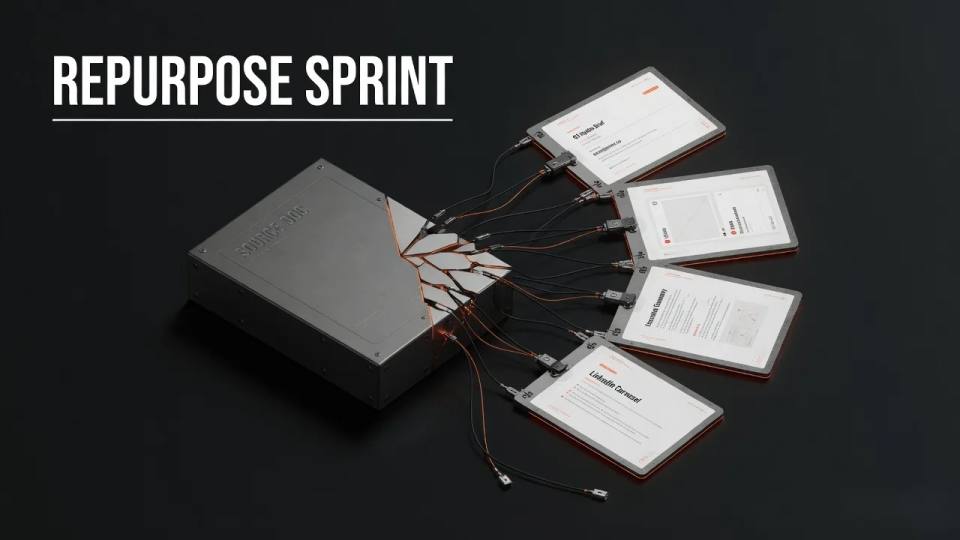
One strong asset, several jobs. Production is cheap; distribution is not. The repurposing sprint that ships a newsletter edition, LinkedIn article, and sales one-pager in ten days is the working template for this phase — adapt it, don’t reinvent it. See the content repurposing sprint for the full plan.
- Newsletter edition sent (if not on launch day) — newsletter open rates average ~40% with 3.8% CTR (GetResponse)
- LinkedIn article published (800–1,200 words) built from the pillar’s direct answer
- Three to five LinkedIn posts cut from the article, each carrying one idea or stat
- FAQ/SEO extract published and internally linked to the pillar
- Sales one-pager revised with what actually came up in conversations
- Video or podcast cut only if your ICP consumes it — long-form B2B video is a separate distribution system, not a repost
- Derivative assets linked back to the pillar as the canonical source
Day 30+ — measure, refresh, kill
Give AI citation a minimum of 30 days before any go/no-go call — the median new page is first cited in 6.8 days, but the long tail stretches to 37. Then decide: double the angles that earned engagement, refresh the asset where the data aged, and kill the channels that produced nothing. Don’t judge a distribution system on clicks: GrowthSpree finds CTR correlation with revenue pipeline is negligible for SaaS (Demand Gen Report).
- 30-day review held with the distribution owner and one channel owner per surface
- Email performance compared against benchmarks: open 32–40%, CTR 2–3.3% (tech higher), CTOR tracked
- List churn and revenue per email reviewed, not just opens (Litmus: open rates are polluted by bot-driven phantom engagement)
- LinkedIn: leading indicators (impressions, reactions, comments) reviewed separately from outcome metrics (citations, share of voice, sentiment)
- AI referral traffic tracked — ChatGPT referrals to B2B sites grew 303% year over year (Demandbase, via Demand Gen Report); measure yours the same way
- Non-branded search traffic trend checked against the asset’s keyword set
- Pipeline influenced logged: which opportunities touched the asset or its derivatives
- Refresh or kill decision made per derivative: double what earned, retire what didn’t
Ownership & SLA
Every channel needs exactly one owner, plus one distribution owner who carries the brief and the calendar. Use a naming convention on assets (e.g., [pillar-slug]—[channel]) so reporting can group by asset in one pass. Deadlines: brief signed off before publish, launch-day sends within 24 hours of publish, amplification starts day 2, repurposing done by day 14, review at day 30. If a channel has no owner at the pre-publish meeting, the channel is cut — an unowned channel is a channel that won’t happen.
Measurement
Track what moves the buyer, not what inflates a dashboard.
- Email (owned, highest value): open rate vs 32.6–39.6% benchmarks, CTR vs 2.0–3.3% (tech & high-tech: 7.4%), click-to-open, list churn, revenue per email. Open rates are distorted by Apple Mail Privacy Protection and bots — weigh clicks, churn, and replies above opens.
- LinkedIn (rented, credibility engine): leading = impressions, reactions, comments, shares, replies. Outcome = AI-search citations, share of voice, sentiment. Keep the two tiers separate; they move at different speeds.
- Search and AI: non-branded organic trend, AI chatbot referrals (the category grew 303% YoY for B2B sites per Demandbase), and direct checks of your target queries in ChatGPT, Perplexity, Gemini, and Copilot.
- Business: opportunities and pipeline influenced by the asset or any derivative, logged in the CRM. CTR alone correlates negligibly with revenue — never let it be the headline number.
For the newsletter mechanics behind this checklist, work through the newsletter growth system; to wire distribution into your content operation, start with the content distribution system.
Citations
Sources & references
- New Guide: How B2B Marketers Can Dominate AI Search on LinkedInLinkedIn Marketing Blog
- The Credibility Code: How B2B Brands Win Trust that ConvertsLinkedIn B2B Institute (with Ipsos)
- Email Marketing Statistics & Trends for 2026Constant Contact
- Email Marketing Benchmarks & StatisticsGetResponse