

Direct answer
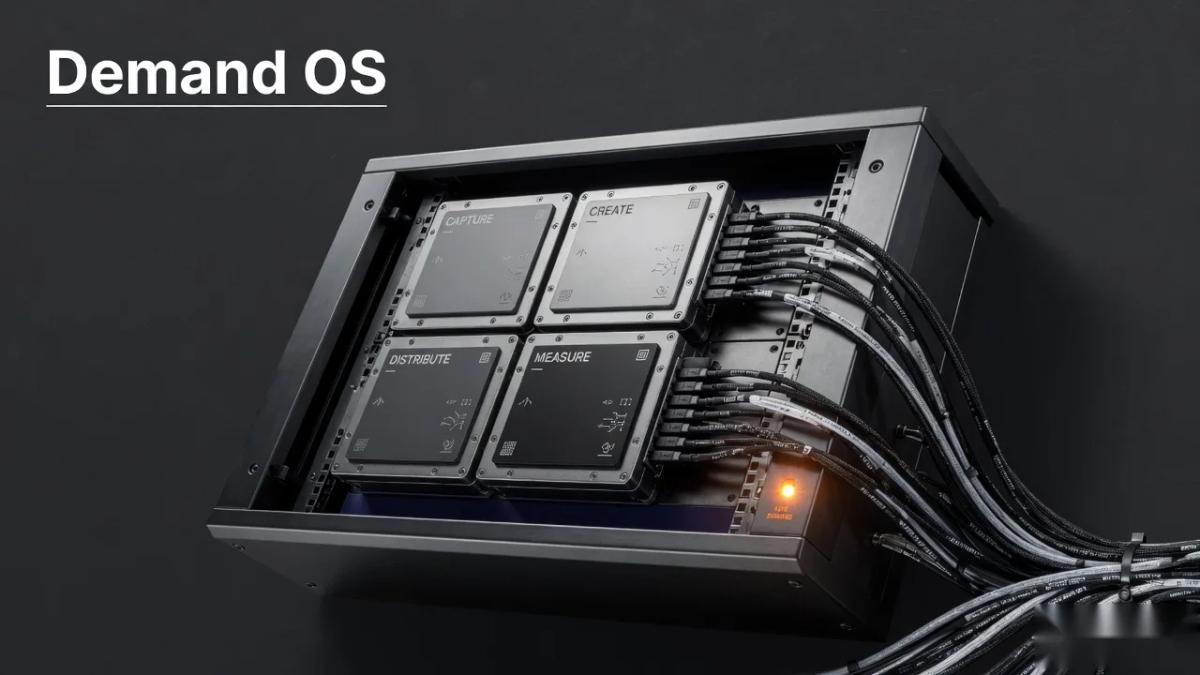
A B2B demand generation operating system is the set of repeatable decisions, workflows, and feedback loops that create demand, capture the intent that now forms in AI assistants, and convert both into qualified pipeline — without depending on a single channel hero moment or a quarterly campaign scramble.
The case for a system has never been stronger, because the inputs changed. Gartner’s 2026 CMO Spend Survey (401 CMOs, January–March 2026) found marketing budgets effectively flat at 7.8% of company revenue, with 15.3% of that budget now allocated to AI — yet only 30% of marketing organizations report mature AI readiness (Gartner, 2026). Meanwhile, CMI’s 2026 B2B research (1,015 marketers) finds just 12% of B2B marketers rate themselves highly effective (CMI, 2026). Flat budgets plus AI-driven buyer behavior means the gap is no longer about more spend — it’s about operating discipline.
If your team only plans “campaigns,” you restart every quarter. If you run an operating system, each quarter improves the same machine.
What changed in 2026: four developments every demand system must absorb
1. AI-mediated demand capture is now measurable — and huge
G2’s Answer Economy research (1,076 B2B buyers, March 2026) shows 51% of B2B software buyers now start research in an AI chatbot more often than Google, up from 29% eleven months earlier — and 69% chose a different vendor than planned based on AI chatbot guidance (G2, 2026). On the traffic side, Demandbase Labs found ChatGPT referrals to B2B websites grew 303% year over year to 2.6 million visits per month by June 2026, with a sharp inflection in May 2026 (Demandbase via DGR, 2026). AI citations are no longer a “future” channel; they are a live capture channel with referral data you can track. See the AI search visibility playbook for how to be findable in it.
2. Budgets are flat, but AI money moved inside the budget
CMOs aren’t getting more money; they’re reallocating. The same Gartner survey found AI-ready marketing organizations allocate 21.3% of budget to AI versus the 15.3% average, and 56% of CMOs say they lack the budget to deliver their 2026 strategy. The operating consequence: every new AI tool must be funded by killing something, which means you need a portfolio rebalance cadence — not an “add AI to the existing plan” habit.
3. Buyer signals are replacing MQL obsession as the currency of demand
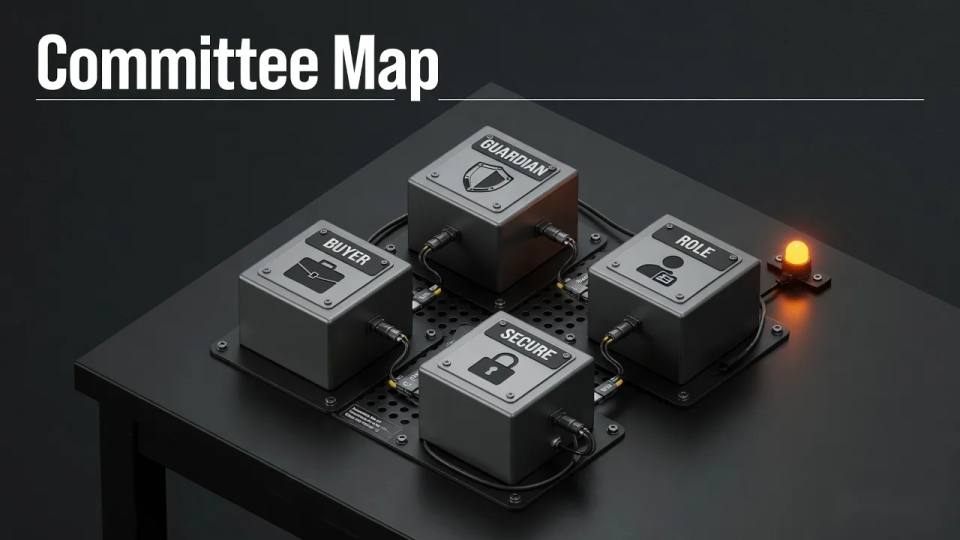
A joint INFUSE/G2 study of 243,000 intent accounts across 11 cybersecurity programs found that demand programs aligned with buyer signals delivered 93% more multi-touch engagement, 21% more leads per account, and 1.6x the likelihood of reaching the decision stage (INFUSE/G2 via DGR, 2026). The same research notes buying groups now average nine members and buying cycles have compressed to seven months. This is the empirical case for shifting from MQL volume to buyer-ready signals — a shift Forrester’s May 2026 report, The GTM Singularity Is Here, frames as abandoning “marketing-qualified lead obsession, gated content, and siloed teams” outright. If you sell to committees, map the buying group before you build anything.
4. Buyers prefer rep-free paths — so conversion architecture is demand infrastructure
Gartner’s March 2026 sales survey (nearly 650 B2B buyers) found 67% prefer a rep-free experience and 45% already used AI during a recent purchase; confident buyers are twice as likely to report a high-quality deal (Gartner via DGR, 2026). Your forms, routing, and self-serve assets are now the front line of demand — not the handoff to sales.
Demand creation vs demand capture
These are not synonyms, and the distinction is operationally critical.
Demand creation introduces a problem, category, or point of view to buyers who were not actively searching. It is slower, narrative-heavy, and measured in influenced pipeline and search-lift over time. HubSpot’s 2026 State of Marketing frames brand POV as “the new growth engine” — as AI floods the market with content, brands without a clear point of view get lost (HubSpot, 2026). Its SVP Kieran Flanagan puts the flip side bluntly: more content is now generated by AI than humans, “but it’s mostly average” — buyers tune it out. Creation is where that human insight lives.
Demand capture meets buyers who already have intent — search, review sites, AI assistants, inbound forms, retargeting. It is faster to attribute and easier to over-optimize until you starve creation.
The 95/5 rule frames the balance: the B2B Institute’s most-cited finding is that roughly 95% of a category’s buyers are out of market at any given moment — only ~5% are actively buying (B2B Institute via HBR). Creation targets the 95% and shapes which brands the 5% even consider — especially now, because G2 found AI chatbots are the #1 source influencing shortlists. Starve creation to feed capture and your paid costs climb while your AI citations dry up.
The six operating loops
Loop 1: Positioning and messaging
Without a sharp ICP, problem statement, and differentiated offer, every channel becomes a volume game. Document who is in-market enough to care this quarter, what change you create, why you win for that segment, and what proof exists today. CMI’s 2026 data says the top driver of effective teams is content relevance and quality (65%), followed by team skills (53%) and sales alignment (45%) — all downstream of positioning (CMI, 2026). A messaging architecture turns this from a slogan into a system: how to build one.
Loop 2: Channel portfolio design
Treat channels as a portfolio with capacity constraints:
| Role | Examples | Job |
|---|---|---|
| Capture | SEO, paid search, AI visibility, comparison pages | Harvest active intent |
| Create | Research, POV content, outbound, community | Shape new demand |
| Amplify | Newsletter, LinkedIn, partner distribution | Compound reach |
| Convert | Landing systems, self-serve demos, sales enablement | Turn attention into pipeline |
Cap the number of active experiments. Most teams underperform because they run twelve half-funded channels — the 2026 demand channel mix snapshot shows how concentrated winners are. AI visibility now belongs in the capture column: with 96% of B2B companies invisible in AI-driven buyer discovery — surfacing only in late-stage queries buyers already know them by — most teams are running an “inverted discovery funnel” (2X AI Visibility Index via DGR, 2026).
Loop 3: Content and distribution as one system
Write less. Distribute more deliberately. Every cornerstone asset ships with: a search intent cluster, a distribution plan (owned + earned + outbound), internal link destinations, a conversion path matched to funnel stage, and a refresh trigger. Content without distribution is inventory — see the content distribution system.
The CMI data explains why distribution discipline matters more than volume: 95% of B2B marketers now use AI-powered applications, yet only 39% say AI improved content performance — and 12% say content quality got worse (CMI, 2026). AI raised output; it didn’t raise impact. The teams winning treat AI as speed for the distribution machine, not as the strategy.
Loop 4: Outbound as a learning system
Outbound is not only a meeting factory. Used well, it tests messaging, ICP edges, and offer packaging — objections and winning language feed directly into landing pages and content briefs. AI changed the capacity math: ICONIQ’s 2026 GTM research across 150+ B2B software companies found more than 65% of marketing teams and 71% of SDR teams now have a majority of FTEs using AI regularly, with voice-powered AI SDRs handling the bulk of inbound volume at some AI-forward companies (ICONIQ, 2026). The outbound system must now capture AI-assisted insights alongside human conversation data — build it as a system, not a send-and-pray cadence.
Loop 5: Conversion architecture
Forms, routing, SLAs, and self-serve assets are demand infrastructure. A high-traffic page with slow routing is a leak, not a demand win. The evidence that most teams leak: Navattic and Chili Piper’s review of the top-100 B2B SaaS websites found only 8% offered direct calendar scheduling on their sites in 2024 — and 19% never responded to demo requests at all (Navattic/Chili Piper, 2024). With 67% of buyers preferring rep-free paths, self-serve evaluation and instant scheduling aren’t nice-to-have — they are the conversion layer. Start with landing page conversion architecture.
Loop 6: Measurement that resists vanity
Track a short list:
- Qualified pipeline created and influenced
- Cost per qualified opportunity by channel family
- Content-assisted opportunities (not last-click alone)
- Stage conversion rates and time-to-first-meeting
- AI citation frequency and AI-referred traffic
- Buyer-signal engagement (accounts with intent × engagement)
The measurement pressure is real: CMI 2026 reports 33% of B2B marketers call measuring content effectiveness a top challenge, and creating content that prompts action is the #1 challenge at 40% (CMI, 2026). The ICONIQ data shows what the gap costs: high AI adopters generate ~2x net new ARR per GTM FTE ($640K vs. $370K) and see ~10-percentage-point lifts in lead-to-MQL and MQL-to-SQL conversion — the difference between teams with and without the measurement loop (ICONIQ, 2026). Build the metric definitions first; these are the ones that matter.
Implementation order
Don’t build all six loops at once. Sequence them:
- Weeks 1–2: Define the ICP segment, problem statement, and offer (Loop 1). Choose one segment for 90 days.
- Weeks 3–4: Map spend and headcount against create / capture / convert. Kill or freeze the bottom third of channels (Loop 2).
- Weeks 5–8: Harden one capture system (AI visibility + SEO) and one conversion path end to end — content, landing page, routing, SLA (Loops 3, 5).
- Weeks 9–12: Install the weekly rhythm and the measurement dashboard (Loop 6); point outbound at the same segment to feed messaging back (Loop 4).
- Monthly: Portfolio rebalance — ship, kill, or scale every experiment.
For a hands-on diagnosis, use the 90-day demand generation audit playbook and its audit worksheet.
Weekly operating rhythm
A lightweight rhythm beats a heavy quarterly plan:
- Monday: pipeline and channel health review (30–45 min)
- Midweek: one experiment decision — ship, kill, or scale
- Friday: content and distribution checklist for next week
- Monthly: portfolio rebalance; kill zombie programs
This cadence matters because the AI budget is now inside your budget. CMI found 32% of B2B marketers at “established” or higher AI implementation — most are still in exploratory/developing stages — and only 28% experiment with AI agents (CMI, 2026). A weekly rhythm forces the integration decisions that turn AI spend into workflow, and it catches the zombie programs that flat budgets can no longer hide.
Common failure modes
- Confusing content volume with demand creation — especially now that AI makes volume free
- Treating AI visibility as an SEO add-on instead of a capture channel with its own metrics
- Measuring only MQL volume while buyer signals and AI citations go untracked
- Letting sales and marketing keep separate definitions of “qualified” (45% of CMI respondents still cite alignment as a challenge)
- Publishing without distribution ownership
- Running 12 channels at 40% capacity instead of 4 channels at 90%
- Buying AI tools before defining the loops they serve — 70% of marketing organizations admit their processes aren’t mature enough to scale AI
What to do next
- Map your current spend and headcount against create / capture / convert.
- Choose one ICP segment for the next 90 days.
- Pick one capture system to harden (AI visibility or SEO) and one creation system to fund.
- Install a weekly rhythm with a single owner, and add AI citation tracking to the dashboard.
The system compounds because its feedback loops are real: outbound language improves content, content improves AI citations, citations improve capture, and measurement decides what survives. That is the difference between a team that runs campaigns and a team that runs a machine.
Citations
Sources & references
- B2B Content and Marketing Trends: Insights for 2026Content Marketing Institute / MarketingProfs
- Building the Modern GTM OrgICONIQ Growth
- 2X Survey Finds 96% of B2B Companies Are Invisible in AI DiscoveryDemand Gen Report
- Gartner: 67% of B2B Buyers Prefer a Rep-Free ExperienceDemand Gen Report
- Forrester Report Calls for New GTM Approach by B2B LeadersDemand Gen Report
- 2024 B2B Buyer First Best Practices ReportNavattic / Chili Piper
- The Right Way to Build Your BrandHarvard Business Review