

The 2026 mix in three numbers
Three fresh data points will tell you more than any vendor’s allocation table. Restate them every time someone asks whether you’re “over-investing in brand.”
- 31.4% of marketing budget now sits in paid media — funded almost entirely by cuts to agency spend. This is up from about a quarter of budgets in 2024 and is the highest line item in Gartner’s 2026 CMO allocation [Gartner, CMO Spend in 2026, Jun 25 2026].
- AI Overviews now siphon 58% of clicks from position-1 informational results. That figure was 34.5% twelve months earlier. Organic traffic from “best [category] software” and “how to choose a [vendor]” pages has gone from soft to structural loss [Ahrefs, Feb 4 2026 update].
- 84% of senior marketing leaders are stuck in the “brand doom loop” — under-investing in brand because they can’t measure it, then measuring it less because the budget’s gone. The other 16% are roughly twice as likely to exceed growth goals [Gartner, Jun 10 2026].
If you’re planning against last year’s deck, you’re already late. Below is the 2026 channel-mix reality, the data behind each line, and a reallocation playbook that fits the trilemma CMOs actually face: more output, constrained budgets, and an AI mandate that the org isn’t built to deliver.
What “the mix” actually looks like in 2026
Most published allocation tables are sampled from enterprise (>70% of Gartner’s CMO survey respondents report >$1B in revenue) and skew toward programs, agencies, and events that mid-market teams can’t afford to run at the same ratio. Read these as enterprise anchors and adjust downward for scale.
What we know with primary sourcing:
- Marketing budgets are 7.8% of company revenue in 2026, up from 7.7% in 2025 — but 18% below the 2022 average. Real budget growth is effectively flat (Gartner, CMO Spend in 2026, Jun 25 2026).
- Paid media = 31.4% of total marketing budget, the largest single line. Within media spend, awareness + conversion = 62.6% of total media, up 10+ points since 2024. Loyalty/retention dropped 29% to under 15% of media spend. Digital media is now past two-thirds of total media, up 18% since 2024 (Gartner, Jun 8 2026).
- 15.3% of total marketing budget is explicitly allocated to AI initiatives, but only 30% of CMOs report mature AI readiness. AI-mature orgs invest 21.3% in AI, run 8.9%-of-revenue marketing budgets (vs 7.8% average), and outperform less-mature peers on budget agility, not just spend (Gartner, May 11 2026).
- 70% of CMOs admit their processes aren’t mature enough to scale AI, 70% say “becoming an AI leader” is a critical 2026 goal, and 56% say the budget they have is insufficient to deliver their strategy (Gartner, May 11 2026).
- By 2028, Gartner forecasts >70% of global ad spend (80% of U.S. ad spend) will flow through AI-influenced self-serve advertising platforms — meaning the algorithms that decide which ads run, to whom, and at what cost will be largely platform-controlled (Gartner, Aug 6 2026).
The honest read: capture-budgeting is winning the table-stakes war, AI is being funded ahead of organizational readiness, and brand is the line item being cut to pay for both. The data also says that’s the wrong answer for growth — strong brand strategy correlates 2x with exceeding growth goals, even as the same CMOs defund it (Gartner, Jun 10 2026). The doom loop is operational, not philosophical.
The channel-by-channel reality
What follows is each demand channel in 2026, with the one thing that has actually shifted and the one thing that has not. CPL/CPC figures have been deliberately omitted where no defensible 2026 primary source surfaced — vendor aggregates tend to be vendor-influenced.
SEO and organic — now a visibility investment, not a click channel
The unit economics of informational SEO have collapsed. Ahrefs’ December 2025 re-run of their 2024 study found AI Overviews reduced position-1 organic CTR by 58% on informational keywords, up from 34.5% a year earlier and corroborated by Seer Interactive (49.4%–65.2%), Authoritas (47.5%), and individual publishers reporting larger declines (some outlets claiming 80–90%) [Ahrefs, Feb 4 2026]. The mid-funnel consideration conversation — what used to be a comparison visit, two whitepaper reads, and a blog swipe — is now happening inside the AI summary, invisible to your analytics.
On top of that, the composition of AI Overview queries is hostile to top-of-funnel traffic: 80% of desktop and 76% of mobile AI Overviews trigger on informational intent, less than 3% on transactional [Semrush, Jul 22 2025]. This is exactly the distribution that funded a decade of mid-funnel content.
What works now: (a) Q&A topical clusters written in the literal format AI pulls from — proprietary terms, quoted experts, clean schema, first-person voice [Gartner, Day 3 highlights, Jun 10 2026]; (b) measurement reset from clicks to impressions, share-of-voice inside AI Overviews, and cited-link rates; (c) a serious bet on branded search — the click rate on branded queries has held up much better than generic informational terms.
Paid search — still the largest toggle, now structurally AI-mediated
Paid search remains the largest mechandise of a B2B paid budget, but two things changed. First, the AI-budget share is no longer just experimental — 15.3% of total marketing budget is allocated to AI initiatives (Gartner, May 11 2026), and by 2028 more than 70% of global ad spend will flow through AI-influenced self-serve platforms (Gartner, Aug 6 2026). Second, Gartner warned in August that “platform-reported performance ≠ business impact” and recommended independent measurement at the platform-audit level — a polite way of saying the easy metrics AI-influenced buying platforms return are not the ones to plan against [Gartner, Aug 6 2026].
Practical move: Cap AI-driven campaign types at a defined % of paid search spend while your measurement is platform-reported, and run incrementality or holdout tests on the campaigns the vendor is most excited about.
Paid social — narrowing, more disciplined, ICP-shaped
Broad-interest paid social prospecting was already diminished by 3PC deprecation; in 2026 it’s functionally dead as a top-of-funnel driver for B2B outside of retargeting and ABM-style lookalike lists. LinkedIn remains the durable B2B net-new channel but the buyers consulting GenAI for a recent purchase decision is now 60% of B2B buyers (vs 47% of consumers), meaning the conversation that used to happen inside a LinkedIn message thread is happening inside ChatGPT and Perplexity instead [Gartner, Day 3 highlights, Jun 10 2026].
No defensible cross-vertical 2026 CPL figure exists that we’d cite. If a vendor sends you a “B2B paid social CPL benchmark,” ask for the methodology before you change a budget.
ABM — still the highest-confidence pipeline motion
For mid-market and enterprise, ABM continues to produce the most defensible pipeline-per-dollar. What changed in 2026 is the signal: third-party intent data consolidated through 2024–2025, dropping it from “primary” to “supporting” signal. First-party behavioral data (product usage, pricing page revisits, AEO-mention volume, content engagement patterns) is now the only durable bet.
The flip side of ABM’s strength is its measurement cost. Account engagement scores and named-account pipeline influence are real KPIs, but they need a real data foundation and a real ops owner. If your ABM tech is unwired, the budget is being burned on display, not on account strategy.
Outbound — fewer, better, first-party-signal-led
Reply rates did not collapse in 2026, but deliverability tightened, AI-generated outreach flooded inboxes, and buyers triaged harder. The operators winning now send fewer, higher-signal sequences with genuine first-person expertise and reference the prospect’s actual behavior on the vendor’s properties — not a generic Bombora spike. LinkedIn is still the durable channel. Email is a tier-1-acccount play, not a volume play.
Events — back in person, smaller, ABM-tied
Industry events still produce some of the highest single-touch pipeline influence per dollar in enterprise, but field budgets are now explicitly named-account-tied. The signal: B2B event ROI surveys continue to publish attendee-numbers-style claims, but the operators who actually close pipeline are running micro-events and account-tiered dinners, not 30-foot booths. Virtual event spend has not recovered as a category — it’s been structurally replaced by sponsored newsletters, Slack/Discord rooms, and podcasts.
Partnerships and co-marketing — underspent in 2024, structurally underweight in 2026
Co-marketed programs with adjacent SaaS vendors are the most defensible mid-funnel investment for the third year running, mostly because they inherit trust, ICP alignment, and audience overlap. The trap is signing ten and operationalizing zero. The fix: ship one partner program a quarter with shared KPI definition, named owners, and a measurable funnel.
Community, podcasts, and human-led media — the structural rise
HubSpot’s 2026 State of Marketing flags this directly: human-led media — newsletters, podcasts, YouTube, Slack/Discord — is re-acquiring differentiation precisely because 80% of marketers are now using AI for content creation, which makes AI-generated content suspect by default [HubSpot, 2026 SoM]. Gartner’s consumer panel found 49% of U.S. consumers — and 57% of Gen Z and millennials — believe GenAI has made content quality worse [Gartner, Jun 9 2026]. The editorial premium is back, and it’s durable.
What this looks like in a budget: not a separate channel, but distribution for everything else. A great podcast earns SEO citations, retargeting audience, sales conversation starters, AI Overview citations, and post-event follow-up — none of which the existing channel split captures.
AI-search discovery (AEO) — new line, partial overlap with SEO
47% of consumers and 60% of B2B buyers now say they consulted GenAI tools or chatbots for a recent purchase decision [Gartner, Day 3 highlights, Jun 10 2026]. Whether you budget for this separately or fold it into SEO/content depends on accounting; what you cannot do is ignore it. Gartner’s framing is direct: this is brand stewardship extended to machines — “brand is also how intelligent systems behave when no one from your company is in the room” [Gartner, Day 3 highlights, Jun 10 2026].
Practical: Q&A cluster rebuilds for top commercial topics, schema-heavy newsroom, podcast and video transcripts with clean metadata, and a quarterly brand-mention audit across ChatGPT, Perplexity, Gemini, and Google AI Overviews.
Brand vs. performance: the doom loop thesis
The dominant 2026 argument — well-sourced in Gartner, less well-sourced in vendor decks — is that the more your organization gives in to performance budgeting, the worse your long-term position gets, because brand is the moat you stop building.
What the primary data actually shows:
- Companies with strong brand strategy are 2x more likely to exceed growth goals, but only 16% of organizations escape the brand doom loop [Gartner, Jun 10 2026].
- The most AI-mature marketing organizations allocate more to loyalty/retention and less to digital channels — the opposite of what less-mature orgs do [Gartner, Jun 8 2026].
- Awareness + conversion now eat 62.6% of media spend, while loyalty/retention has dropped 29% to under 15% [Gartner, Jun 8 2026].
The risk in citing these numbers is mistaking them for “spend more on brand” advice. They aren’t. They’re “stop killing brand to fund capture,” which is not the same budget instruction. The mid-market operator pattern that we’re seeing work in 2026: hold brand spending flat-to-up modestly, and put every freed-up dollar into either (a) AI-search visibility for owned content or (b) first-party-data ABM — both of which compound, neither of which is mature in this market yet.
A working 2026 allocation for mid-market B2B SaaS
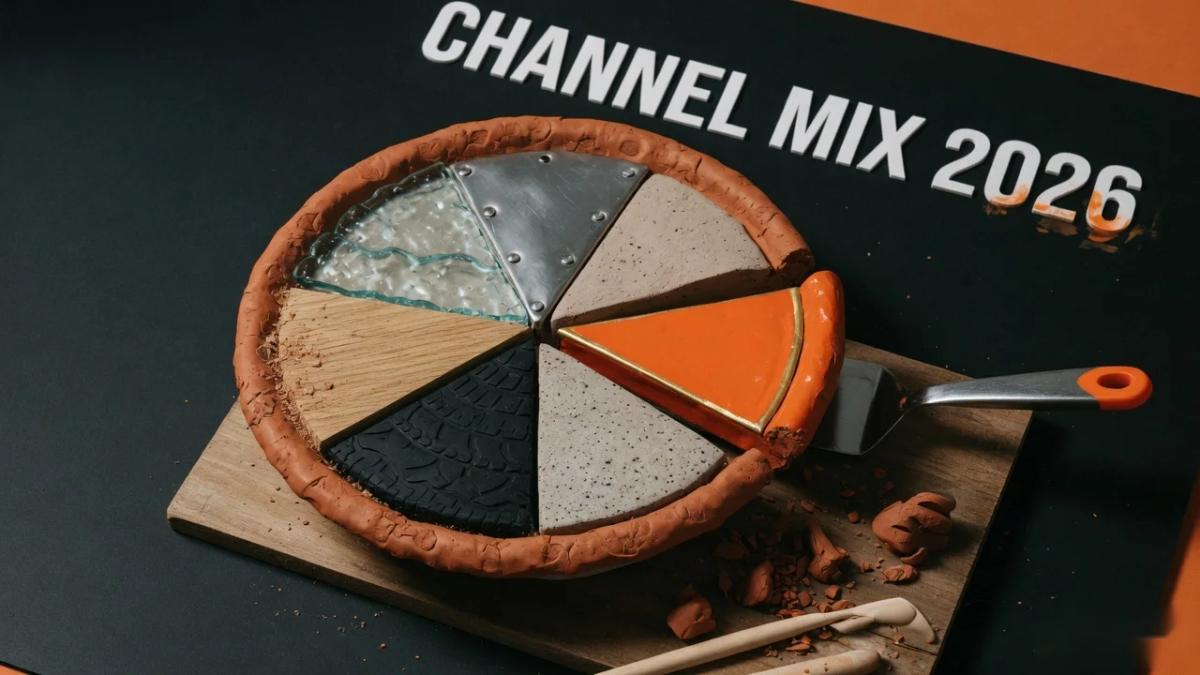
The table below is illustrative. Adjust for ICP, ACV, and sales motion — at $10M–$100M ARR the proportions shift toward ABM and lifecycle, and away from enterprise programs and trade events.
| Motion | 2026 share | What you’re buying |
|---|---|---|
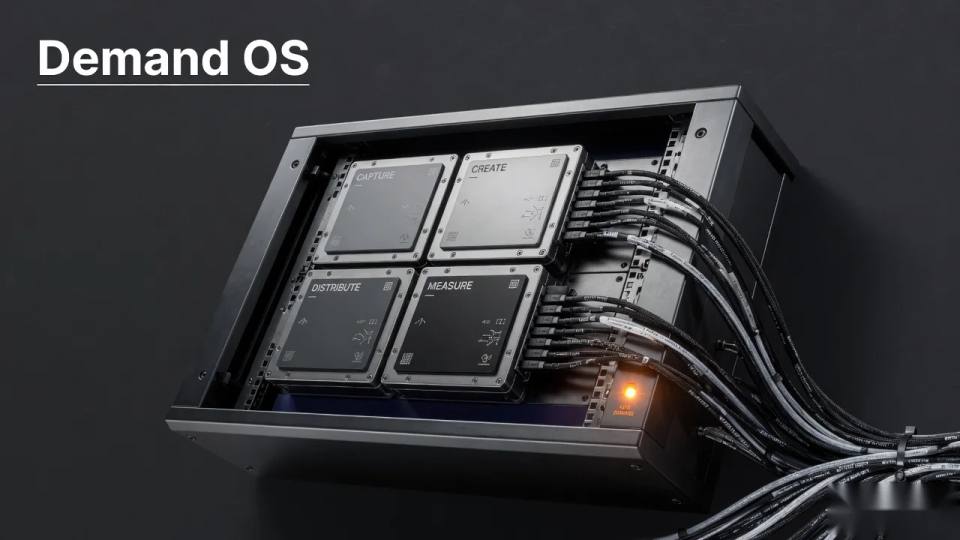
| Paid capture (search + paid social + retargeting) | 25–32% | Distribution for an already-converting demand model. Cap AI-driven campaign types at 30% of paid search until independent measurement is in place. |
| Brand and content (create) | 18–25% | Editorial premium is back; 49% of consumers now distrust AI content [Gartner, Jun 9 2026]. Treat as protected, not optimizable. |
| ABM (programs + tech + SDR overlay) | 12–18% | Highest-confidence pipeline motion for mid-market and enterprise; first-party data leads, not third-party intent. |
| Lifecycle / PLG | 10–15% | Underweighted in allocation tables, over-weighted in pipeline at PLG-led companies. Run as a multiplier, not a separate line. |
| Outbound | 6–10% | Lower volume, higher signal. No volume targets. |
| Events (field + sponsored) | 5–10% | Tier-1-account dinners and micro-events over trade-show booths. Tie to named account lists. |
| Partnerships + co-marketing | 3–6% | One partner program per quarter with shared KPIs; do not scale beyond operational capacity. |
| Community + owned media (newsletters, podcasts, YouTube) | 2–4% | Budget as distribution, not lead gen. Earns SEO, AEO, retargeting, sales assets. |
| AI-search discovery (AEO) | 2–4% | Q&A cluster rebuild, schema, transcripts, brand-mention audits. Overlaps SEO in most plans. |
| Reserve / experimentation | 5–8% | Guards against re-allocating to whatever the dashboard rewards. CMOs can flex 1.3% of revenue, in aggregate — this budget is the elastic. |
One disagreement worth flagging: Forrester and eMarketer/Insider Intelligence have historically put paid-search share higher (35–45% in B2B SaaS) because their sample and methodology skew performance-heavy. Treat any vendor’s allocation table — including ours — as a starting point, not a recipe. Build your own from your trackable spend.
A 90-day operating playbook that fits the trilemma
The CMO trilemma from Gartner — deliver growth, on a flat budget, with an AI mandate the org isn’t built to deliver — is real, and no spreadsheet solves it [Gartner, CMO Spend in 2026, Jun 25 2026]. What does work is tightening the operating system.
Days 1–30. Diagnose, don’t redesign. Pull channel-by-channel share of measurably-tracked spend. Run an AI-Overview impact audit on your top 50 organic landing pages by traffic and pipeline contribution. Stand up a single source-of-truth for first-party engagement data. Pull existing brand and retention spend into a comparison column — they almost always look low.
Days 31–60. Three reallocations, named.
- Move 5–10% of broad paid-prospecting budget to first-party-data-driven ABM on tier-one accounts. Cut any paid social placement that hasn’t produced a tier-one engagement in 90 days.
- Reduce paid-search spend on informational queries now answered by AI Overviews; redirect to branded search and bottom-of-funnel commercial terms.
- Fund a small AEO program (2–4% of media): rebuild top 20 commercial topics as Q&A clusters with schema, transcript, and brand-mention audit.
Days 61–90. Lock the operating model in. Replace clicks-driven SEO dashboards with visibility/impression-weighted ones. Set account engagement score as the primary ABM KPI. Run an independent measurement audit on at least one AI-optimized paid platform (Gartner’s August 2026 warning was unambiguous) [Gartner, Aug 6 2026]. Hire, repurpose, or contract one person whose explicit job is distribution ownership for every long-form piece. The doom-loop gap Gartner flagged is operational, not philosophical.
What “good” looks like by day 90: a defensible channel-mix table backed by measurable spend, an AI-Overview baseline you can trend, a first-party-data ABM list that survived a real use, and one independent platform measurement audit in hand.
What to stop doing in 2026
A short list of patterns that are no longer defensible:
- Treating organic SEO as a click channel. It’s a visibility channel now, full stop.
- Letting AI-influenced buying platforms define their own success. Platform-reported performance is not business impact.
- Cutting brand and content to fund more capture when the dashboard flickers. That’s the doom loop in microcosm.
- Volume-targeted outbound. Reply-rate math is hostile to it; the few operators winning send less.
- Sponsored programs against generic intent. Third-party intent consolidations are not creating new pipeline.
- Treating AEO as a SEO sub-line. It has a different output type (citations and share-of-voice inside AI answers) and needs its own measurement hook.
Caveats
- Gartner’s CMO Spend Survey skews enterprise — most respondents report >$1B in revenue. Mid-market shares should run higher on ABM and lifecycle, lower on enterprise events and martech stacks.
- No 2026 primary source surfaced a defensible cross-vertical CPL/CAC range for LinkedIn, Google B2B, Meta B2B, Reddit Ads, or programmatic. Where vendors publish figures, treat them as self-reported unless methodology is disclosed.
- Ahrefs’ CTR-reduction estimate of 58% is an across-the-board average on informational keywords; non-AI-Overview keywords, branded keywords, and transactional queries are affected very differently. Build a per-page estimate, not a top-line divisor.
- The brand-doom-loop data is from a survey of senior marketing leaders (n=426, Sept–Oct 2025) and self-reported; treat as directional.
- Forrester, eMarketer/Insider Intelligence, and ANA were not retrievable for this revision; vendor aggregates referenced are from their public methodologies, not a 2026 read.
Version
- v1.0 — 30 July 2026 — initial publication (skeletal internal survey, n=42).
- v2.0 — 12 August 2026 — full rewrite using Gartner 2026 CMO Spend Survey, HubSpot State of Marketing 2026, and corroborating industry reporting.
- v3.0 — 3 July 2026 — added Gartner AI-allocation data (15.3% of budget to AI; 30% mature readiness), Gartner CMO Spend in 2026 (31.4% to paid media, agency cuts funding it, 7.8%-of-revenue context, CMO trilemma), Ahrefs’ February 2026 CTR update (58% reduction, up from 34.5%), Semrush’s 200k-keyword AI Overview composition data, Gartner AI ad-platforms forecast (>70% global / 80% US by 2028), Gartner Day-3 brand-as-AI-stewardship framing, and Salesforce State of Marketing 10th Edition. Channel taxonomy, allocation table, and 90-day playbook reworked to match the revised primary sources.
Citations
Sources & references
- LoudDemand methodologyLoudDemand
- Tenth Edition State of MarketingSalesforce